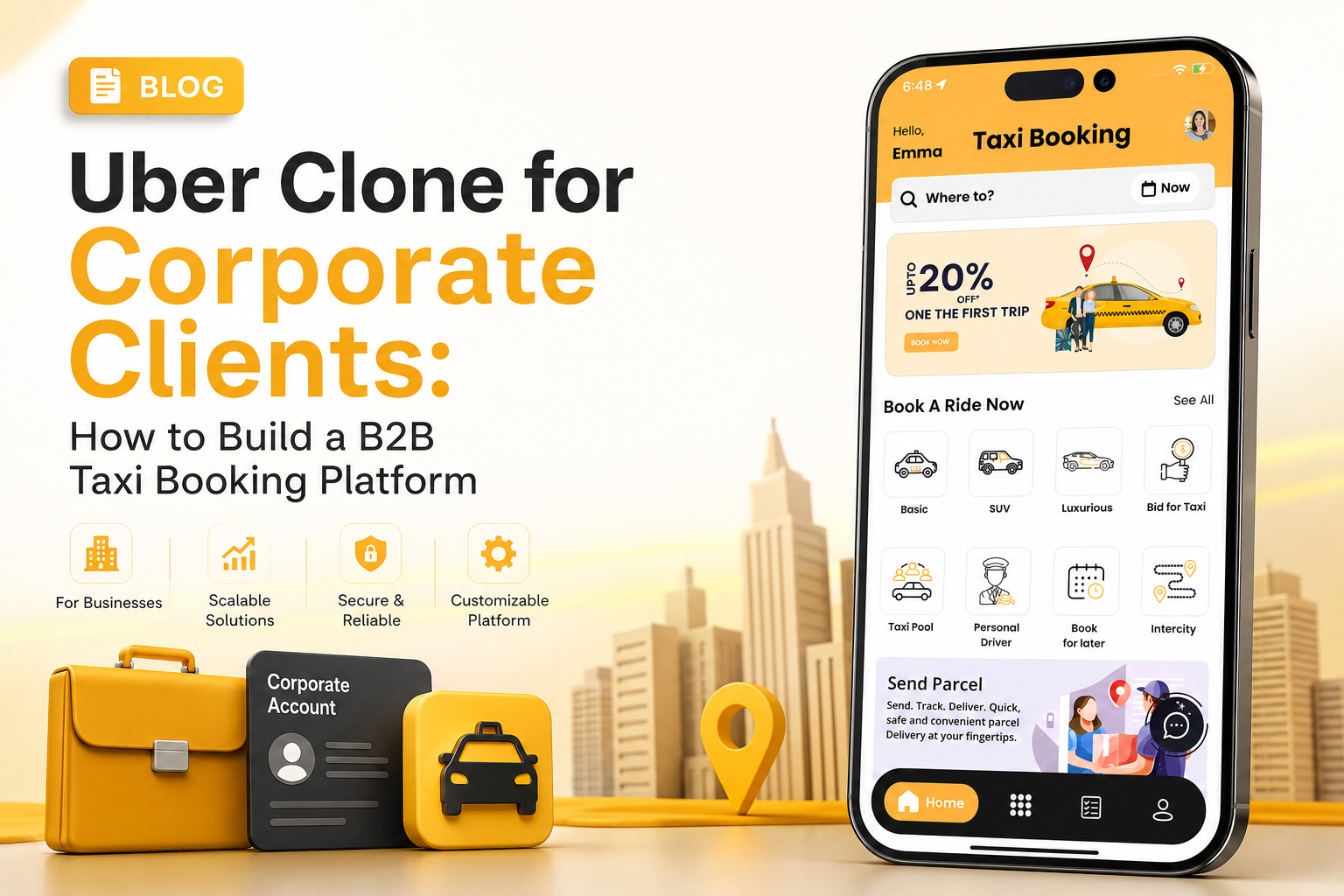
Most founders who launch an Uber clone app usually spend their energy trying to get individual consumers. They focus on offering a lower fare, a faster pickup, or a cleaner car, which is a reasonable plan but it is also a very crowded space.
The B2B side, specifically handling corporate employee transportation, is mostly wide open in many emerging markets, and the features to run this are already built into the standard Uber clone script packages.
The issue with corporate transportation is actually much larger than most people think. HR managers at mid-sized companies spend real hours every single month tracking down reimbursement receipts, matching up driver invoices, and dealing with complaints from employees who get stranded after late meetings. That regular hassle is exactly where your platform can step in effectively.
Why the Corporate Rides Feature in an Uber Clone App Deserves Its Own Strategy
Table of Contents
Most founders just treat corporate rides like a button they can toggle in the admin panel. They switch it on, send out a few cold emails to local businesses, and just wait around for bulk bookings to show up, which is basically hoping for the best rather than having a real plan.
The actual opportunity here goes much deeper than that. For example, there is usually a dedicated flow for corporate profiles where the employee just goes to the My Profile section in the app, selects ‘Corporate’, and puts in their company name.
From that moment on, every single work trip the employee takes gets billed automatically to the company account, meaning the reimbursements are handled right there in the platform instead of people dealing with messy spreadsheets and text groups. This is not just a small convenience upgrade for the company. It completely replaces a frustrating manual process that most office managers actually hate dealing with.
You might naturally think that having corporate accounts means you will make less money per ride because companies usually ask for volume discounts. That concern makes sense on the surface. But the thing that balances it out is the predictability of the income.
A company that signs a monthly contract with your platform basically gives you a guaranteed base revenue that you can rely on effectively. Having that guaranteed money matters quite a lot during your first twelve months, especially when normal customer bookings go up and down wildly because of seasons changing, competitors running promotions, or driver shortages.
Corporate contracts help smooth out those rough patches naturally. Giving them a discounted fare is honestly a very fair trade-off for having a predictable income that you can actually count on every month.
Simply put, the Corporate Rides feature works as a tool that lets your platform become the main solution for companies looking to handle their employee transport costs easily.
Understanding this angle is really important for founders. When you pitch to a corporate client, you shouldn’t just offer them cheaper rides.
Your real pitch is telling them that your app will completely eliminate their headaches with managing transport expenses.
Building the B2B Platform Layer: What the Setup Actually Needs
Setting up a corporate-grade taxi platform takes a lot more effort than just turning on a single feature in the settings. All these different parts need to work together as a solid system, and each one actually makes the other parts much better.
Setting Up the Organization Web Panel
Having a dedicated Organization Web Panel lets companies (mostly their HR or procurement teams) handle their details, watch the rides their employees are taking, and track all their transport costs in one spot. You have to realize this panel is completely different from your main admin dashboard. It acts as a client-facing screen that sits right between your admin controls and the employee who is actually booking the ride.
Getting this separation right is really important because a company’s finance manager doesn’t want to log into your system and accidentally see all your driver earnings data right next to their company invoice.
Activating the Employee Booking Flow
For the actual booking part, employees just use the normal user app on Android or iOS, go to the Corporate profile option under their profile settings, and link their account to their company name.
After that, any ride they mark as a work trip gets routed to the company’s account automatically. The important thing here is the schedule-later booking feature, which lets employees pre-book things like airport pickups or client meetings ahead of time.
This is exactly the kind of hassle elimination that HR managers are looking for when you talk to them about using your service.
Configuring the Billing Administrator Panel
You also get a separate Billing Administrator Web Panel that runs alongside your standard admin setup. This split lets your operations team handle things like billing disputes and corporate invoicing without giving them full access to your broader admin controls.
There are also separate dispatcher and accounts panels to support this effectively. For corporate clients especially, being able to pull clean payment reports, wallet histories, and trip logs by organization gives them the financial transparency their procurement teams actually demand before signing any contract.
Enabling Fleet and Driver Management by Company
The Fleet Company Management Web Panel lets fleet operators or transport vendors handle their own drivers, vehicles, and earnings completely independently.
If you are a founder trying to build a B2B-focused platform, this panel basically lets you bring in dedicated corporate fleets as their own separate groups in your system, rather than mixing them up with your regular consumer drivers. Companies that want consistent, highly vetted drivers specifically for their executive travel actually value this separation quite a lot.
Using AI Dispatch for Predictable Service
The backend uses AI for smart dispatching, figuring out the best routes, predicting demand, and doing automated reporting. When you are dealing with corporate accounts that have strict service agreements (like guaranteed pickup time windows for their staff), these AI features go from being just a nice addition to being completely necessary for your operations.
The head of operations at a client company will usually ask you straight up if your system can handle forty employees needing rides between 8:45 and 9:15 AM without ruining the pickup times. The AI dispatch layer is exactly what lets you say yes with total confidence instead of just hoping for the best.
How Corporate Accounts Can Change Your Business Revenue
Here is why a corporate account might seem like a contradiction at first. Even if the rates per ride are lower, these accounts often end up being your most profitable way to make money. The secret is all in how efficiently they run.
With regular riders, you are constantly spending money on marketing, promo codes, and driver bonuses just to keep people booking. But once you sign a corporate account, they usually stay with you automatically as long as your service is good. Your cost to get new customers (CAC) for a company with fifty employees is just one single sales meeting, rather than running fifty different ad campaigns for fifty separate people.
Plus, having an Organization Web Panel and a Billing Admin Panel really takes the pressure off your support team. Finance managers can handle their own billing statements, and HR managers can track their own employee ride logs. You’ll get way fewer complaints in your inbox because the system is designed to let the company manage itself.
When you use a solid Uber Clone App that already includes these specific panels and corporate profiles, you can launch in about two weeks. Building this from scratch would normally take six to nine months of custom development. That time difference is a huge deal when you’re trying to beat a well-funded competitor to the market.
Final Thoughts
Corporate travel is a massive B2B market that is basically hiding in plain sight. Most Uber clone scripts already come with everything a founder needs to start: the Organization Panel, the employee ride flow, and the Fleet Management tools.
The technology isn’t what’s holding you back. The real trick is realizing that corporate clients aren’t just looking for the cheapest ride possible. They want someone to solve their entire transportation expense headache for them. If you build your sales pitch around solving that problem, you’ll find that the B2B market opens up much faster than the regular consumer market ever will.