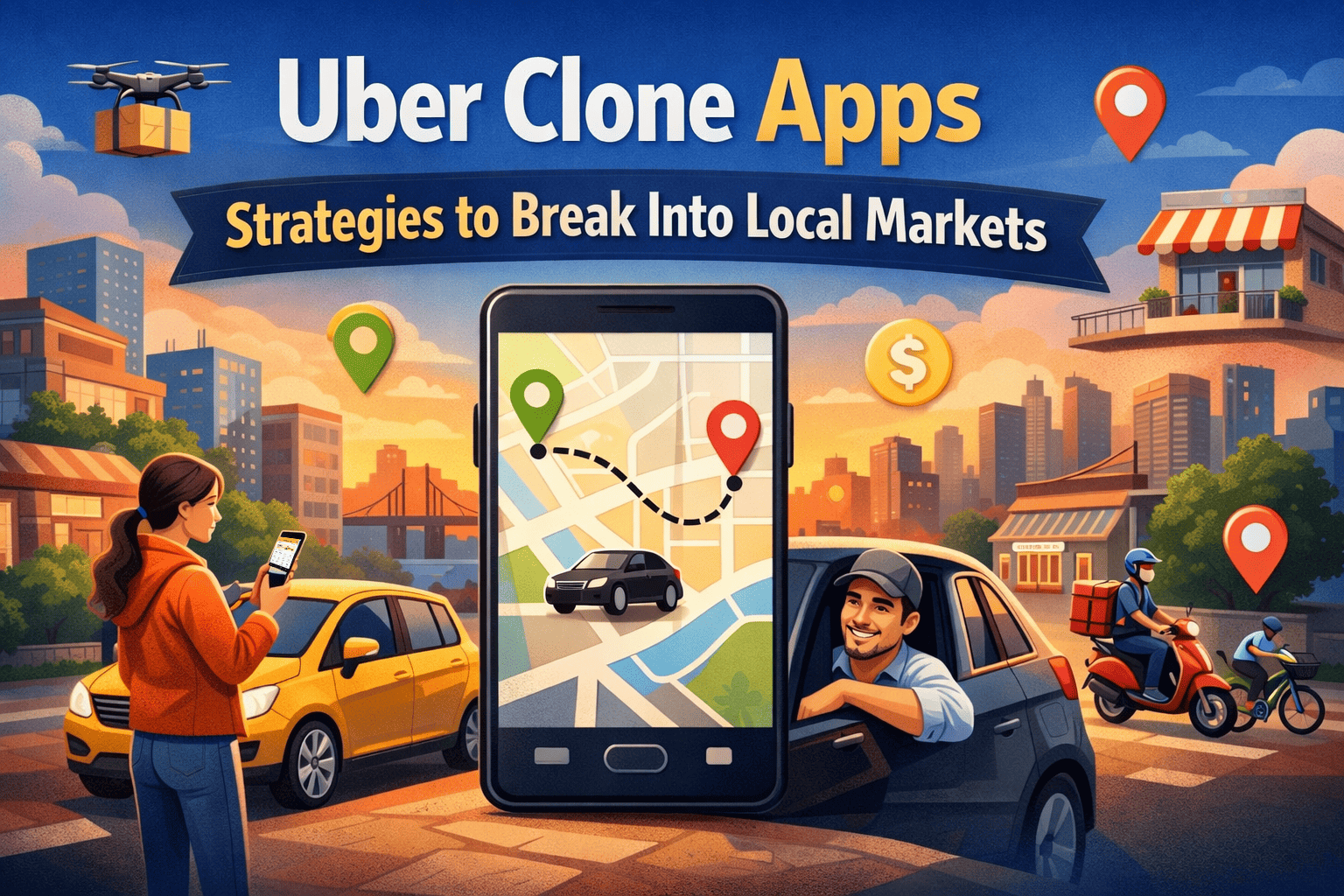
Entering a local market with an Uber Clone is not about launching an app and waiting for downloads to roll in. Local markets are living, breathing systems. People have habits, drivers have routines, and trust is earned slowly. If you try to force your way in, the market pushes back. If you understand it, the market opens up.
Many founders believe the biggest challenge is technology. In reality, the toughest part is winning the first hundred users and the first fifty drivers. Once that happens, momentum starts doing the heavy lifting. So let’s talk about how an Uber Clone actually enters local markets, the practical way.
What Local Market Wants From Uber Clone?
Table of Contents
Local taxi markets are not obsessed with innovation. They want relatability. Users love punctual drivers, easy to book, and safely enjoyed rides. Drivers want predictable income and fewer headaches. Everything else is secondary.
This is why global strategies often fail at the local level. Big promises sound good, but local users judge based on daily experience. If your Uber Clone feels complicated, expensive, or unfamiliar, people quietly go back to what they were using before.
The smartest move is to observe before acting. Look at how people currently book rides. Notice peak hours, busy locations, and common complaints. These small observations shape big decisions later.
Start Small, Because Big Launches Break Easily
One of the typical errors committed by founders is the simultaneous launching over the whole city at once. It might look great on paper but in practice, it causes a shortage of resources. Drivers get stuck for too long waiting for rides, customers get stuck for too long waiting for drivers and the annoyance increases for both parties.
Local market entry works best when it starts like a pilot, not a parade. Choose one zone where demand is obvious. Business hubs, railway stations, airport routes, or dense residential areas usually work well. In these pockets, ride behavior is consistent and learning happens fast.
When one area starts running smoothly, expansion stops feeling risky. It feels like copying a proven formula.
Driver Safety Matters in Taxi Apps
An Uber Clone without drivers is just an app icon. In local markets, drivers are not easily impressed. Many of them have seen platforms come and go. They sign up only when they believe the app will actually bring rides.
This is why early driver onboarding needs more effort than early user marketing. Personal onboarding, local language explanations, and clear earning breakdowns make a huge difference. When drivers understand how they will earn, trust builds faster.
In the beginning, the incentives are effective, but the main factor is the consistency. Regular rides even in fewer amounts are preferable to occasional high-paying rides once in a week. Drivers communicate among themselves, and their interactions shape the reputation of the company.
Relatable Pricing of Uber Clone
Local users have a mental price meter. They know what a ride should cost, even if they cannot explain why. When your Uber Clone prices feel unfamiliar, adoption slows down instantly.
Matching local fare structures in the beginning helps users feel safe. Once trust builds, dynamic pricing can be introduced carefully. The key is transparency. If users understand why prices change during peak hours or rain, resistance drops.
The same logic applies to drivers. Fair commissions and clear payouts reduce drop-offs. When both sides feel the pricing is honest, the platform stabilizes.
More Than Language, Uber Clone Must Have…
Many apps translate buttons and call it localization. Local markets expect more.
People want payment options they already use. In many regions, cash and UPI still dominate. Ignoring this is like closing the door on half your audience. Navigation should recognize local landmarks, not just pin codes. Support should understand local problems, not reply with scripted answers.
When users feel the app speaks their language, literally and culturally, it stops feeling new and starts feeling normal. That is the real win.
Trust Is the Currency of Local Markets
Local users trust what feels real. They trust faces, familiarity, and consistency. This is why driver profiles, ratings, live tracking, and safety features are not optional. They are trust signals.
Offline trust matters too. Branded vehicles, driver ID cards, and visible presence in public places create recall. People feel safer using something they have already seen in their neighbourhood.
Once trust is established, growth becomes organic. People recommend the app not because it is new, but because it works.
Marketing Should Blend In, Not Shout
Local markets do not respond well to loud digital marketing. They respond to relevance.
WhatsApp referrals, local partnerships, driver word-of-mouth, and small offline promotions work better than expensive campaigns. When a friend says, “I used this app, it’s good,” that carries more weight than any banner ad.
The goal is not to look big. The goal is to look dependable.
Competing Smart Beats Competing Hard
Most local markets already have competition. Trying to outspend them rarely works. Trying to out-understand them does.
Faster support, flexible ride options, better driver treatment, and quicker local problem resolution create differentiation without burning cash. Local players win because they listen better, not because they shout louder.
Technology Should Support Growth, Not Distract From It
A stable Uber Clone gives founders room to focus on execution. When ride matching works smoothly, payments process correctly, and the admin panel offers control, decisions become easier.
Good technology quietly supports local expansion. Bad technology forces constant firefighting.
This is why choosing a reliable white-label Uber Clone matters. It removes unnecessary friction and let’s founders focus on market realities instead of technical surprises.
From Local Entry to Long-Term Presence
Entering a local market is not a one-time event. It is a phase of learning, adjusting, and building relationships. When done right, growth feels natural. Drivers stay, users return, and the platform becomes part of daily life.
Local markets do not limit ambition. They sharpen it. In case you are investigating the areas where an Uber Clone can be applied in your city, recognizing these ground realities is decisive. By applying patience, local knowledge, and the proper groundwork, the entry of local markets turns from a challenge to a successful story told many times over.