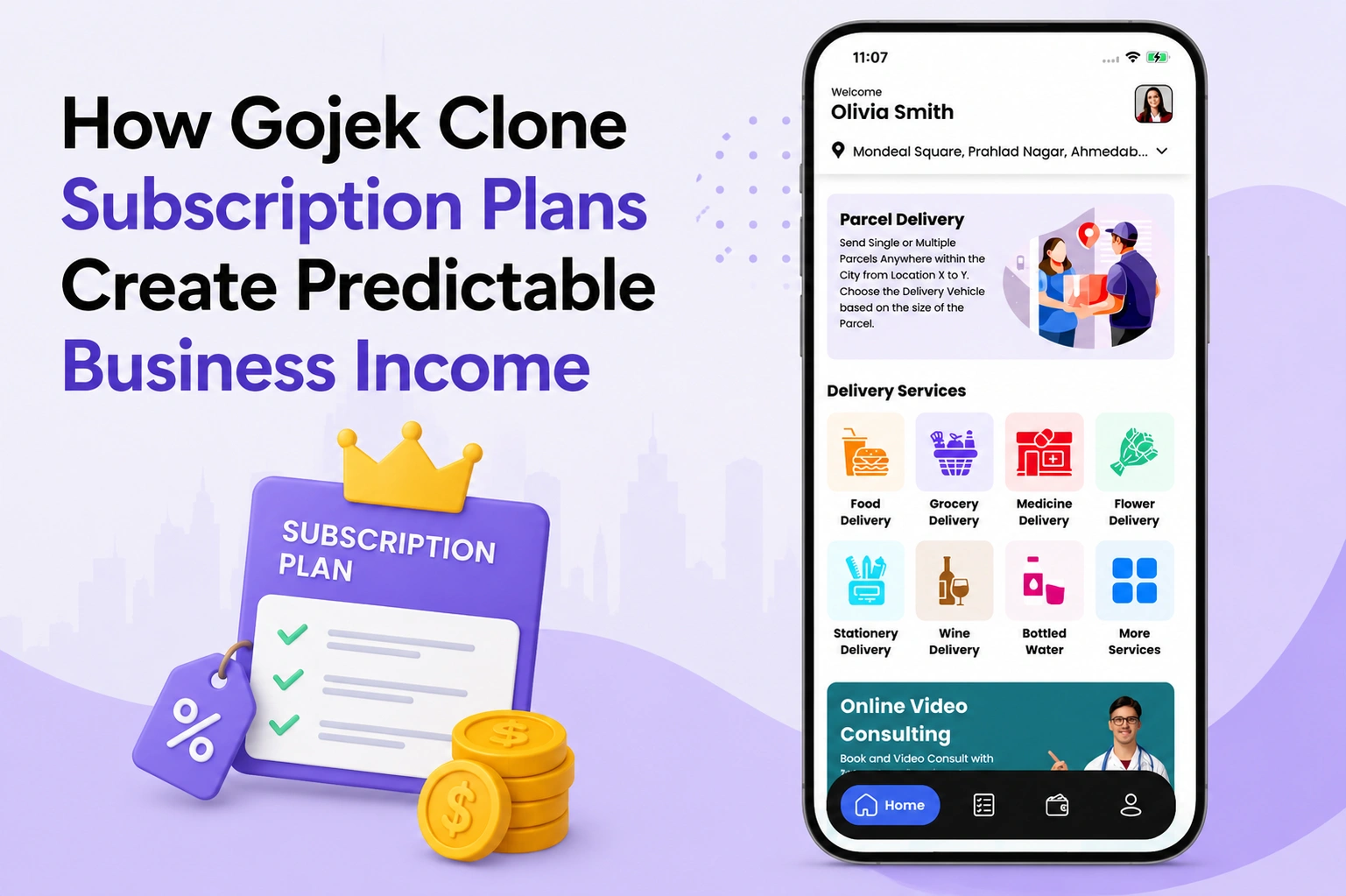
While commissions remain a key revenue source for a Gojek clone, relying on them alone can limit long-term growth. Since commission earnings depend entirely on the number of bookings completed, platform revenue can become unpredictable during periods of lower demand.
Every business owner who has seen commission reports drop during holiday periods already understands this pattern. The platform, drivers, and handymen may still remain active, but commission profits decline due to fewer customer transactions. This situation exposes the vulnerability of a commission-only model.
The good news is that this can be balanced with subscription-based fees. Alongside commissions and advertisements, subscriptions can serve as a stable and highly strategic revenue stream for the business.
According to Recurly’s 2026 State of Subscriptions report, based on data from 2,200+ subscription businesses and 76 million subscribers, subscription businesses are driving growth through retention, with plans generating 50–60% more revenue per user than monthly plans.
Why a Subscription Model Adds Stability to the App
Table of Contents
A subscription model brings real stability to a Gojek clone app. Businesses that use a recurring revenue model usually grow much faster than those relying only on transactions. This is because regular income makes things much more predictable. It helps support daily operations and marketing efforts without relying heavily on short-term booking fluctuations..
App owners can charge a subscription fee from service providers just to keep their profiles active. This creates a steady income stream that commissions simply cannot match. When a driver or handyman pays a monthly fee, the multi-service platform makes money even if there are no bookings that day. This revenue remains consistent even during bad weather, holiday periods, or temporary declines in customer demand.
However, charging providers during slower periods can create challenges if order volumes are low. Over time, they may begin to question the value of the platform, leading to reduced trust and higher churn. This is a very common concern for business owners. The good news is that it can be easily managed with a smart approach.
The steady income from subscriptions can be used to run marketing campaigns and offer promo codes during low periods. This additional marketing helps bring booking volume back to providers. Basically, the subscription fee funds the marketing, and the marketing brings in the orders. Instead of treating this revenue as passive profit during slower months, it should be strategically reinvested to drive customer acquisition and increase platform activity.
Building an Effective Subscription Strategy Across Your Platform
Adding subscriptions to your Gojek clone app is not a set-it-and-forget-it strategy. It works differently depending on the type of service, the provider, and the business size. Here is how to set it up the right way.
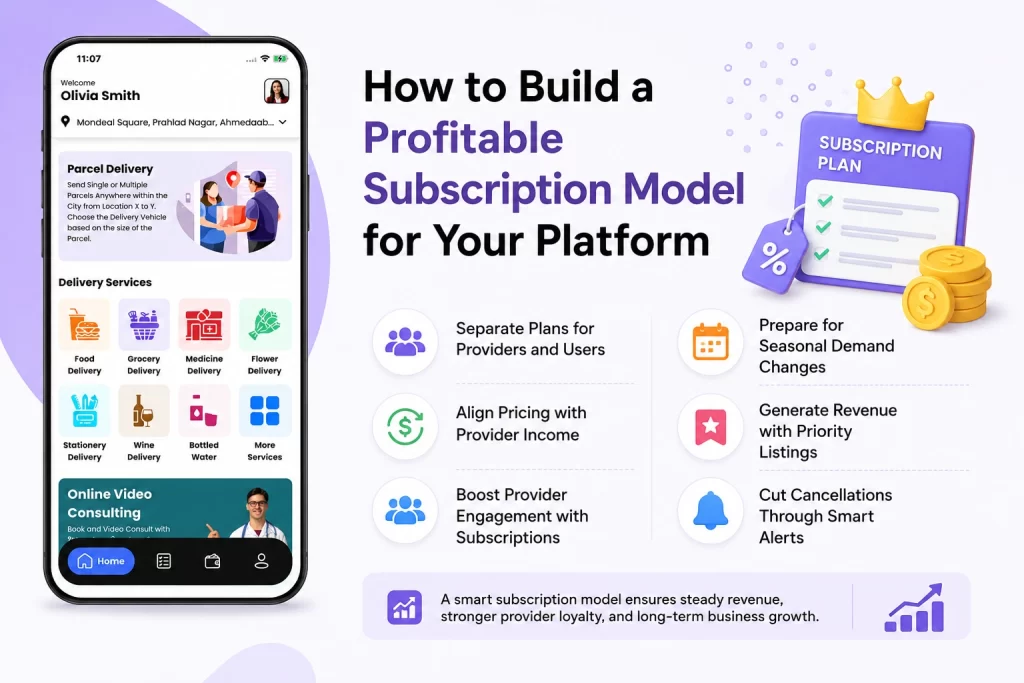
1. Separating Provider and User Subscriptions
Provider subscriptions are centered around access. Drivers, cleaners, or beauticians pay a recurring fee to keep their profiles active and receive job opportunities through the platform. In return, they gain access to a customer base that would otherwise be difficult to reach independently.
User subscriptions, on the other hand, are focused on visibility. A person selling a car, listing a property, or promoting products pays for better placement in search results and increased exposure on the platform. These models serve different purposes, address different user needs, and require distinct pricing approaches. They should be positioned and managed as separate products.
2. Matching Subscription Prices with Provider Earnings
Providers will only pay a subscription if they make more money from the app than the fee itself. Because of this, your pricing should change based on the service category.
For example, a taxi driver gets multiple rides a day and makes enough to afford a standard monthly fee. In contrast, a pet groomer may receive only a limited number of bookings each week. They should pay a much lower fee for using the platform.
You can easily set different commission rates for different categories in the admin panel. Apply this same logic to your subscription fees. This creates a much fairer system and stops lower-earning providers from leaving the platform.
3. Using Subscriptions to Keep Providers Active
There is a psychological benefit to a subscription model. When a service provider pays a monthly fee, they make a financial commitment to the app. Even a small financial commitment can significantly influence how users engage with the platform.
Providers paying a fixed fee are far less likely to go offline during slow weeks compared to those relying only on commissions. Since they already paid for the month, they will stay online to make the most of it. This keeps your providers active and available.
When users open the app and see available providers, they successfully complete their bookings. These completed bookings generate additional commission revenue that would otherwise be lost if providers logged off.
4. Planning Around Seasonal Demand
Periods of slow business activity are often predictable. Public holidays, school breaks, or rainy seasons can easily slow down daily orders. You can look at your past booking data to identify these seasonal drops.
Once you know your slow months, you can adjust your subscription plans. Instead of only offering monthly plans where providers might cancel during a slow month, offer quarterly or yearly plans at a discount. This encourages them to stay committed even when bookings are naturally low.
The long-term strength of subscription models is already visible across industries. Research also found that subscription businesses have historically grown nearly 4.6 times faster than S&P 500 companies over the past decade because of their predictable recurring revenue structure.
5. Making Money from Paid Priority Listings
The app allows users to list real estate, cars, and general items for sale or rent. In these marketplaces, sellers always want their items to be seen first.
You can charge users a fee to highlight their listings and put them at the top of the search results. This works across multiple marketplace categories without requiring much additional effort from your side. The seller pays for better visibility, and the platform makes a profit.
This income is generated just by publishing the listing. It does not rely on actual sales or deliveries, making it a highly stable revenue stream.
6. Reducing Cancellations with Smart Notifications
In-app notifications are a great way to keep providers subscribed. You can set up a notification to go out a few days before their subscription ends. This message can show them exactly how many bookings they completed and how much they earned that month.
When a provider sees proof of the value they received, they are much more likely to renew. This is a lot better than sending a simple, boring payment reminder. All the earnings data is already available in the billing panel. Business owners just need to set up this automated message to protect their recurring revenue easily.
Final Thoughts
Commission income only comes in when users make a booking. Subscription income, however, comes in regularly every month regardless of daily demand. This makes a Gojek clone app much stronger than a business relying only on customer orders.
Subscription revenue grows automatically without requiring much manual effort. Providers renew automatically, payments are processed seamlessly, and the billing panel tracks everything on its own. The technical effort to run a subscription model is actually very low.
Slow business periods are just a normal part of the calendar. Every market experiences them, and every platform feels the impact. The real difference is whether your business model can handle the drop in orders. A platform that combines subscriptions, commissions, and paid listings is built to survive in any condition.
FAQs
1. Do subscriptions make sense for a brand-new platform?
No, charging providers when you still have very few customer bookings will only make them leave. It is always better to introduce subscription fees only after the platform has enough regular orders to justify the cost for the providers.
2. Why use subscriptions instead of just charging higher commissions?
Higher commissions still depend on transactions actually happening. If a provider has a slow week, the platform makes zero money from them. A subscription guarantees a fixed monthly income for the business regardless of weekly order volumes.
3. Should subscription prices be the same for all services?
No, prices should vary based on the service category. Matching the fee to the average earnings and booking volume of that specific category creates a much fairer system. This keeps all providers happy and stops lower-earning categories from leaving the app.
4. What happens to subscription income when expanding to a new city?
Subscription revenue in the new city will naturally take time to grow. You need time to build a strong base of providers and customers first. However, the steady subscription income from your already established cities will continue to flow in. This means existing subscription revenue can help fund expansion into new markets.