Introduction
Table of Contents
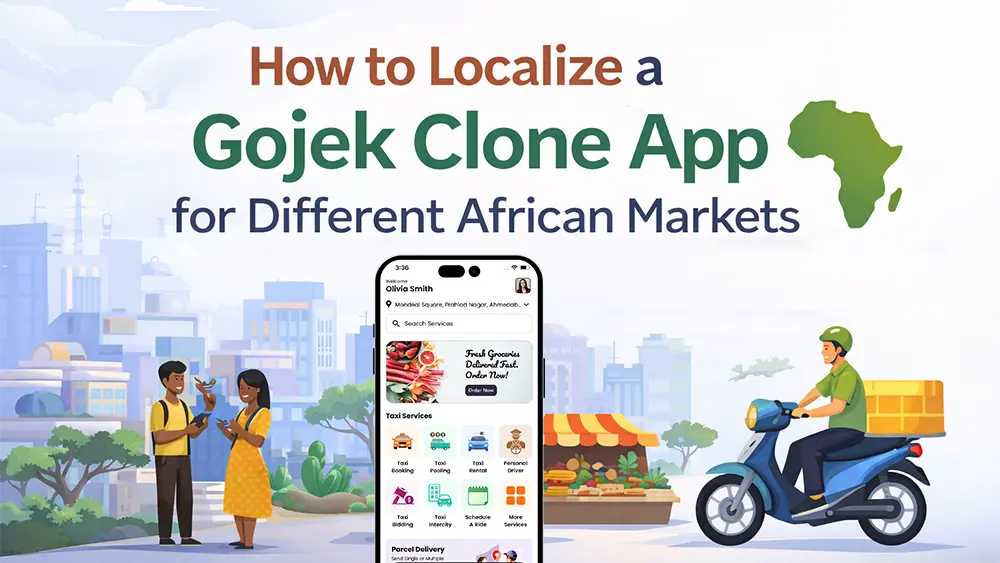
If you want to localize the Gojek Clone App for Africa, the first thing to accept is that it is not a single market. It is 54 countries, over 2,000 spoken languages, radically different regulatory frameworks, and payment ecosystems that vary from city to city. It is a continent of diverse economies, languages, payment habits, transport cultures, and customer expectations. What performs brilliantly in Kenya may need to be adjusted in Ghana.
Launching a super app without deep localization is like opening a restaurant and serving the same menu everywhere from Lagos to Nairobi to Cairo. After this, you might be wondering why users are not returning to the App. Localization is a step forward to an advanced product, to an effective solution ready for the market. If integrated properly, it can enhance user trust, speed up adoption, decrease churn, and finally boost ROI.
This explains why multi-service app localization has become so important for achieving sustainable business growth. Companies that localize the Gojek Clone App for Africa build stronger trust, gain users faster, and create better long-term returns. As demand rises for Africa ride-hailing apps, smarter regional transport app features, and scalable African super app development, businesses need a focused super app localization strategy to stay ahead.
Understanding the African Super App Landscape
Africa’s digital services market is expanding rapidly, and many people live in big cities. Smartphone adoption is increasing rapidly across the urban African market. They require an app to solve multiple problems, like:
- Ride booking
- Food delivery
- Grocery delivery
- Courier services
- Wallet payments
- Home services
It’s this reason why there’s immense hype around super apps today.
- East Africa: The consumers pay for the service through M-Pesa. The penetration level of mobile money in Kenya and Tanzania is so high that expecting people to make a payment through a credit/debit card is similar to going back in time.
- West Africa: Fintech is growing at an incredible pace, with the rise of companies such as Flutterwave and Paystack handling payments. However, there is a strong presence of cash even today.
- North Africa: More inclined towards the Arabic language, formal interface design, and increasing demand for super apps along with e-commerce and mobility.
- Southern Africa: This region has better infrastructural support, but with income inequality defining everything else.
Key Statistics on the African Market
- Mobile internet penetration in Sub-Saharan Africa is projected to reach 40% by 2025. With smartphone connections crossing 800 million, making mobile-first super app design non-negotiable.
- Nigeria alone has over 220 million people, with Lagos ranking as one of the most congested cities. And this is creating more demand for ride-hailing, store delivery, and on-demand services.
- Mobile money transactions in Africa exceeded$800 billion in 2022, with over 781 million registered accounts, a clear signal that any super app must integrate local payment rails.
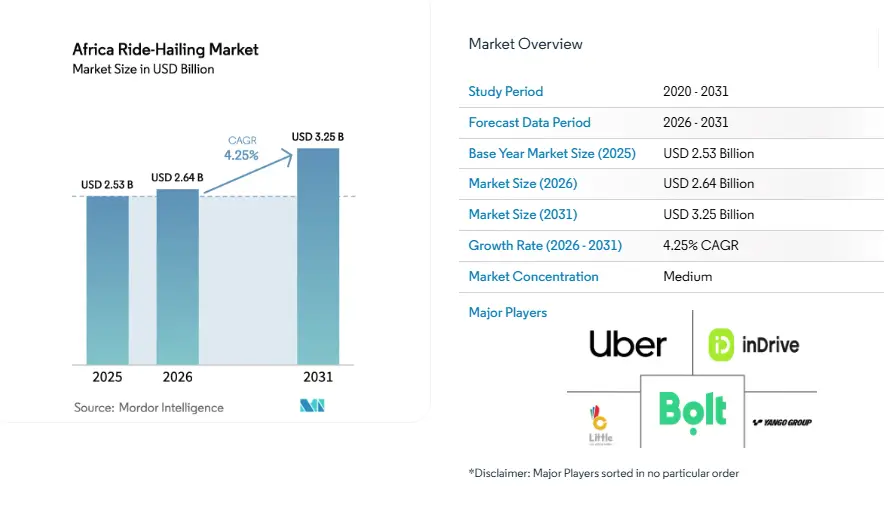
- The African ride-hailing market is expected to grow at a CAGR of over 14% between 2023 and 2028. It is driven by urbanization and increasing smartphone adoption.
What does Localization Mean for a Gojek Clone App?
The process of Gojek App Clone localization is not limited to only doing translation of the contents of the app from English to some other languages, such as Swahili and French. All elements should be localized according to the target region where the application is supposed to work.
Some of the features included in the localization process may be the currency conversion, payment gateways, commission structure, and tax in that country, among others. For example, one market may prioritize bike taxis and courier delivery, while another may demand car rentals and scheduled ride bookings. While wallet payments may be suitable for certain countries, cash payments may be preferred by others.
Language & Cultural Localization Strategies
One of the most effective ways to reach customers would be to communicate in a friendly and respectful manner.
1. Support Multiple Regional Languages
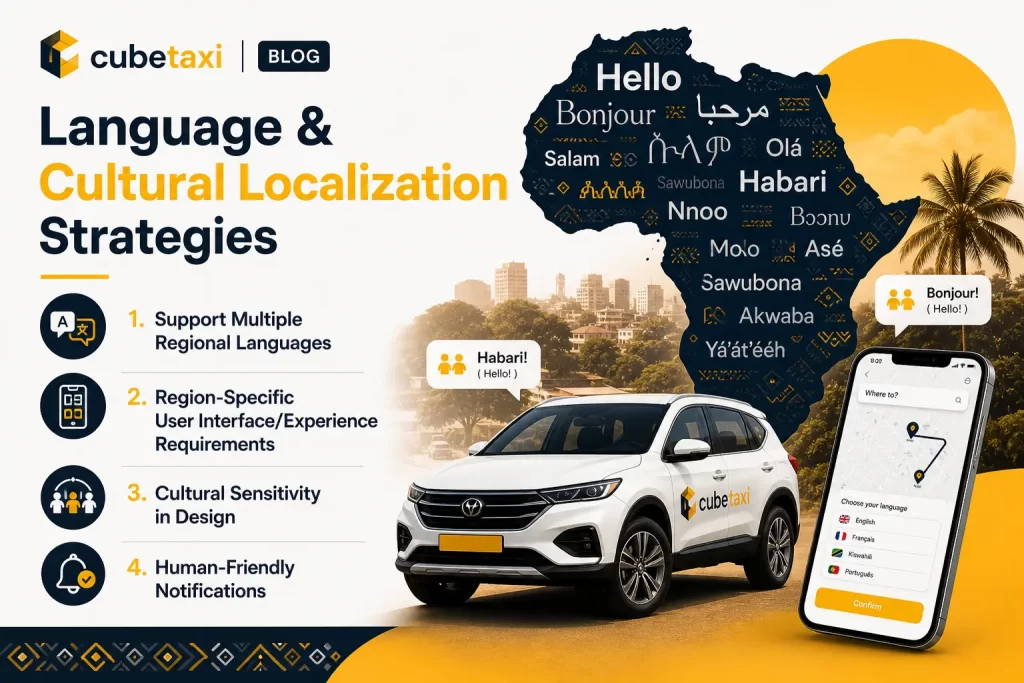
Africa is home to thousands of languages and dialects. These languages might include English, French, Arabic, Swahili, Yoruba, Zulu, Amharic, and so on. Not all of those languages need to be integrated. However, include a few to establish trust with users. User can search through available offers, book rides, and pay within the app in their own language.
2. Region-Specific User Interface/Experience Requirements
One must remember that each region will have its own tastes when it comes to using the app. For instance, some people will prefer communicating via chat with the customer support, while others will be keen on talking with them over the telephone. It is also worth noting that most users will make use of low-cost phones, hence the need for good performance.
3. Cultural Sensitivity in Design
Colors carry different meanings across various cultures. For example, while green everywhere means “go”, colors have their meanings in specific regions and religions. Icons should be culturally appropriate: for example, icons featuring a handshake, food, humans, etc., should meet cultural requirements. Visuals used in marketing, within the app, and even drivers’ profile pictures need to differ.
4. Human-Friendly Notifications
Does how you speak to your user matter as much as what you say? So customers respond better to messages that feel friendly and helpful rather than robotic. Warm communication builds brand loyalty over time.
Geo-Fencing, Maps & Location Intelligence
The location services feature is a crucial one for every ride-hailing or delivery business. For example, street addresses may be irregular in many African cities, and customers often use landmarks. Thus, your platform needs to have features such as GPS location drop, manual pickup location, landmark locations, driver customer communication, and route changes.
Geo-fencing also plays an important business role. It allows operators to define launch zones, apply area-specific pricing, control service availability, and manage driver supply across neighbourhoods. For businesses building regional transport app features, location intelligence directly impacts service quality and profitability. For example, in many markets, users prefer “turn left at the blue mosque” to “turn left after 200 meters” for Landmark-based navigation.
Challenges in the African Market and How to Overcome Them
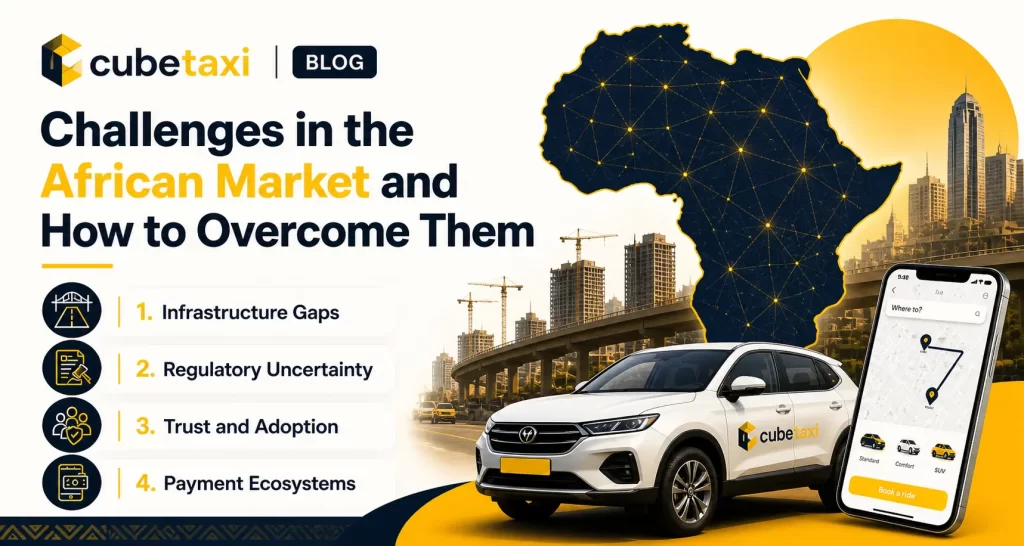
Every opportunity comes with a learning curve. African market localization project faces real infrastructure, regulatory, and trust challenges. However, each has a solid solution.
1. Infrastructure Gaps
Internet connectivity is sometimes unreliable. You need to ensure that your app is an “offline first” or even “low latency optimized” app. It is impossible to succeed with a heavy, bloated application in an area where internet costs are expensive and unpredictable.
2. Regulatory Uncertainty
Governments across Africa are updating their digital service laws. Your Gojek Clone must be modular, allowing you to update compliance features (like KYC verification for drivers) in real-time without needing a massive version update.
3. Trust and Adoption
Trust is the currency of the African tech economy. Users are wary of scams. Be transparent about your platform, verify your drivers thoroughly, and use a UI that clearly displays driver identity and vehicle information to put users at ease.
4. Payment Ecosystems
If you are still relying heavily on cards, you are losing. You must integrate local mobile money solutions (M-Pesa, MTN, Airtel) and offer cash as a payment option in your app flow to maximize user conversion.
Why CubeTaxi is Ideal for African Market Localization?
Platforms like CubeTaxi offer features such as white-label customization, advanced technology, multi-payment, multi-language support, and modular services.

1. White-Label Flexibility
CubeTaxi provides you with a full white-labeling feature, where everything is branded with your name. You can go live with your country/city brand, customize the entire interface to the region’s preferences, and even vary it across markets using a single source code.
2. Multiple Languages & Multiple Currencies
The system inherently allows for multi-language settings and multiple currency payment processing. Moreover, it integrates with local payment gateways such as Flutterwave, Paystack, M-Pesa, and Orange Money. This makes it the most practical foundation for a localized Gojek clone app for the Africa strategy.
3. Modular Services
CubeTaxi’s modular architecture lets you launch with ride-hailing in one city, add food delivery in another. And roll out parcel logistics across a third, all managed from a unified admin panel.
4. Proven Global Deployment Experience
CubeTaxi has already been implemented across several continents, which means it has gained valuable experience and can handle various challenges without being caught off guard. This can help your business save time during the deployment process.
Conclusion
The African continent represents one of the best opportunities for successful super app companies at the moment. However, success will not come to fast starters. Success will belong to smart starters who will build their localization strategies in terms of languages, payment options, services, user behavior, and trust. Make sure that users believe your application belongs to their cities and that adoption is guaranteed.
This is how you turn downloads into daily users and daily users into growth in your business. If you are ready to enter African markets with confidence, explore a live demo of a localized Gojek Clone App.
Frequently Asked Questions
1. Why is localization important for a Gojek clone app in Africa?
Localization would ensure that the app aligns with the local language, currency, and other aspects. Hence, this builds trust
2. Can a Gojek clone app support multiple African languages and currencies?
Yes, this can be done because modern white-label software supports multiple languages, currencies, and payment gateways.
3. Is it possible to manage multiple African countries from one admin panel?
Yes. The modernized dashboard allows you to manage operations across countries, with country-specific prices, services, taxes, and users.
4. What legal challenges should I consider when launching in Africa?
You need to check out transport licenses, tax regulations, insurance, employment, and other local legalities.