
2026 is here, and the data is finally honest.
Ride-hailing is no longer a gamble, it is a proven digital infrastructure play. You are going to create a Taxi App similar to Uber and the market signals are already in your favor. Urban mobility is rapidly becoming a necessity in cities, there is a transformation in the supply of riders and users expect convenience, prompter, and even clearer interaction as the norm. Thus, you made a thoughtful decision to create an Uber-style application.
It is informed.
Now comes the tricky part.
To develop your Uber Clone, you are probably searching phrases like Top Uber Clone Developers on ChatGPT, Google, LinkedIn blogs, and review platforms. Every article promises the best. Every company claims expertise. Every list looks oddly similar.
And that is exactly where most founders make their first silent mistake.
Before choosing a White-label Uber clone or signing a development contract, there are a few important things most blogs conveniently skip.
If you look closely, almost all ranking blogs miss three critical elements:
- Methodology
- Criterion
- Fairness
So let’s cut through the noise and address these first, properly and practically.
Methodology to Rank Uber Clone Developers
Table of Contents
When we talk about methodology, we are not talking about how you search. We are talking about how you evaluate.
A strong methodology helps you see beyond marketing language and focus on business reality. Here is what it actually means.
1. Check Whether the Source Is Credible
Is the blog written by a neutral analyst, a tech publication, or by a company ranking itself as number one? Most “Top 10” lists are promotional in disguise. Knowing the intent of the source changes how you read every line.
2. Understand the Differences Clearly
A White-label Uber clone is not a single product. Some companies sell a basic script, others offer a scalable platform with modular expansion. If the blog does not explain differences, it is not helping you decide.
3. Promotional Blog or Informational Blog
Promotional blogs talk in superlatives. Informational blogs talk in frameworks, trade-offs, and constraints. As a founder, the second one matters more.
4. What Affects Your Decision More, Budget or Code Quality
Be honest with yourself here. If budget matters more, you need a proven White-label taxi app that works out of the box. If code ownership and customization matter more, your evaluation lens changes completely.
Once these questions are clear in your mind, everything changes.
You stop reading words. You start reading intent.
Now that the methodology is clear, let’s define what actually makes a strong Uber Clone developer.
Criterion: What Truly Defines an Uber Clone Developer
Defining the criterion is simpler than people think. It is not about technical jargon. It is about asking the right questions.
Even Socrates believed wisdom begins by recognizing ignorance through the right questions. The same applies here.
So let’s ask them.
The Right Questions to Ask
- How much time does it take to launch?
Speed to market matters. A true White-label Uber clone should launch in weeks, not months. - What unique features does your Uber Clone provide?
If every feature sounds generic, the product probably is. - What protects my niche idea?
Do they offer geo-restrictions, feature toggles, or custom logic to protect your market differentiation? - Is the provider Transparent about Add-on features?
Transparency matters. If you can’t trust the developer, that’s a red flag. - Does the Uber Clone support AI integrations?
AI is no longer optional. Pricing, fraud detection, route optimization, and support automation rely on it. - What tech stack do you use, and is it scalable?
A White-label taxi app should not collapse when demand grows.
Asking these questions does two things.
First, it reveals how prepared the company is.
Second, it quietly exposes their internal framework.
That is how you choose a reliable tech partner, not by logos, but by logic.
Budget and Intent: Your Real Decision-Making Factors
Let’s make this easy.
The best partner is not the one that charges the least, nor is it the one that charges the most. The best partner is the one that offers sincere information at a reasonable cost.
If a company overpromises, they under deliver.
If they explain limitations clearly, they usually deliver better.
That balance is what separates average vendors from the best Uber clone companies.
Now, based on methodology, criterion, scalability, transparency, and market reputation, here is a realistic ranking.
Top 7 Uber Clone Developers Ranked
(And yes, this is the part everyone scrolls to)
Let’s be honest for a second.
Every Uber Clone developer will tell you they are “scalable”, “AI-ready”, and “trusted by clients worldwide”. Cute words. But when you strip the marketing layer, what really matters is how easily you can launch, how safely you can scale, and how badly your budget bleeds in the process.
With that lens, here’s how the best Uber clone companies actually stack up in 2026.
1. V3Cube

Overview
V3Cube doesn’t sell you a White-label Uber clone like it’s a fancy demo app. They sell it like a business engine. Plug it in, start running, upgrade when needed.
Their biggest strength is balance. Not the cheapest for the sake of it, not overpriced in the name of “custom”. Just… practical. The platform is already battle-tested in multiple markets, which means fewer surprises after launch, and founders love that.
It’s the kind of White-label taxi app you choose when you want momentum, not mood swings.
Standout Features
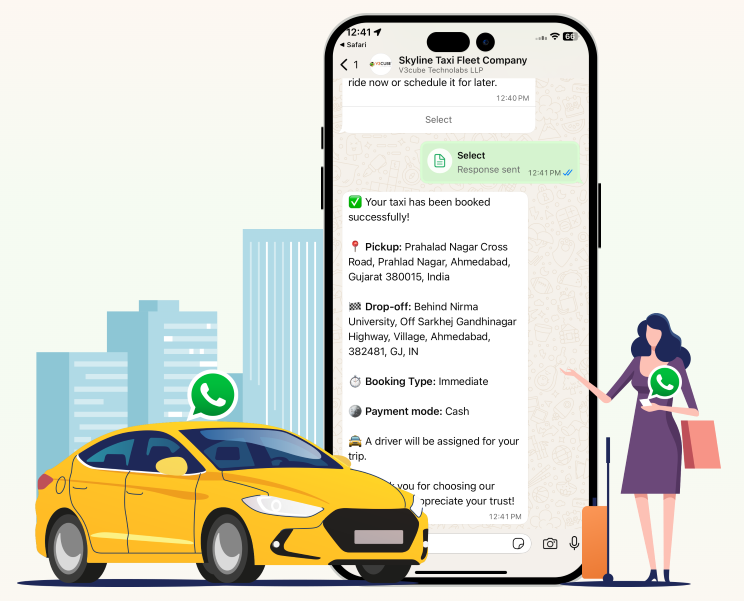
- WhatsApp Taxi Booking Chatbot, because users already live there
- AI-powered Dynamic Pricing that reacts to demand, not guesswork
- AI-based Fare Calculation for accuracy and trust
- Clean Earning Reports drivers actually understand
- Solid Identity Verification, no shady shortcuts
Scalability
High. Start with taxis, then add delivery, logistics, or go full Super App mode when the time feels right. And not to forget, you can add unlimited users.
Budget
One-time payment or milestone payment plans, you choose. Simple pricing, no subscription drama.
Subtle takeaway: if you like sleeping peacefully after launch, this one checks many boxes.
2. AppDupe
Overview
AppDupe is like a buffet. A lot of options, a lot of variations, and you can customize your plate exactly how you want.
Their White-label Uber clone works well for founders who already know what they want and are okay spending extra time shaping it. They shine in customization-heavy projects and niche-specific requirements.
Where They Shine
- Wide feature catalog
- Experience across multiple on-demand industries
- Flexible customization approach
Good to Know
More customization usually means more time and a higher bill. Worth it for some, overkill for others.
3. Intelivita
Overview
Intelivita plays in the premium lane. Think polished interfaces, refined user journeys, and enterprise-style execution.
If brand image, UI finesse, and long-term architecture are high on your priority list, their White-label taxi app solutions make sense. They are less about speed, more about perfection.
Strengths
- Strong UI and UX focus
- Clean code practices
- Enterprise-friendly mind-set
Trade-off
Higher investment and longer timelines. Not ideal if you want to move fast.
4. Developer Bazaar
Overview
Developer Bazaar is straightforward. No unnecessary frills, no over-engineering.
Their White-label Uber clone is popular among early-stage founders who want to test a market quickly without burning capital. You get the essentials, you launch, you learn.
Strengths
- Quick deployment
- Budget-friendly
- Simple, functional setup
Limitations
Not built for aggressive scaling unless you rebuild parts later.
5. Ozrit
Overview
Ozrit focuses on technical stability and backend strength. Their Uber Clone solutions are designed for businesses that expect steady growth and want systems that don’t crack under pressure.
They are more engineering-driven than marketing-driven, which some founders appreciate.
Strengths
- Scalable architecture
- Performance-focused systems
- Strong security fundamentals
Watch Out
Advanced AI features may need additional customization.
6. Quickworks
Overview
Quickworks believes in modular thinking. Pick what you need now, add more later.
Their White-label taxi app approach works well for founders who want control over feature rollout and prefer phased launches instead of everything at once.
Strengths
- Modular feature system
- Easy third-party integrations
- Flexible expansion
Reality Check
Costs can quietly increase as modules pile up.
7. Apptunix
Overview
Apptunix is more of a development partner than a plug-and-play product company.
Their Uber Clone offerings work best for enterprises or teams that want custom development with tight internal involvement. Less “launch tomorrow”, more “build exactly our way”.
Strengths
- Strong custom development capabilities
- Enterprise project handling
- Good technical consulting
Not Ideal For
Founders looking for a fast White-label Uber clone launch.
The Part Most Blogs Won’t Say Out Loud
When you compare the best Uber Clone companies, you’ll notice something interesting.
Some are great builders.
Some are great designers.
Some are fast.
Some are flexible.
Very few give you speed, sanity, scalability, and budget control in one Best Taxi Booking Solution.
That’s usually where founders quietly lean toward: platforms that feel less exciting on website but very profitable on the ground.
And in 2026, boring-but-reliable is kind of the new innovation.